
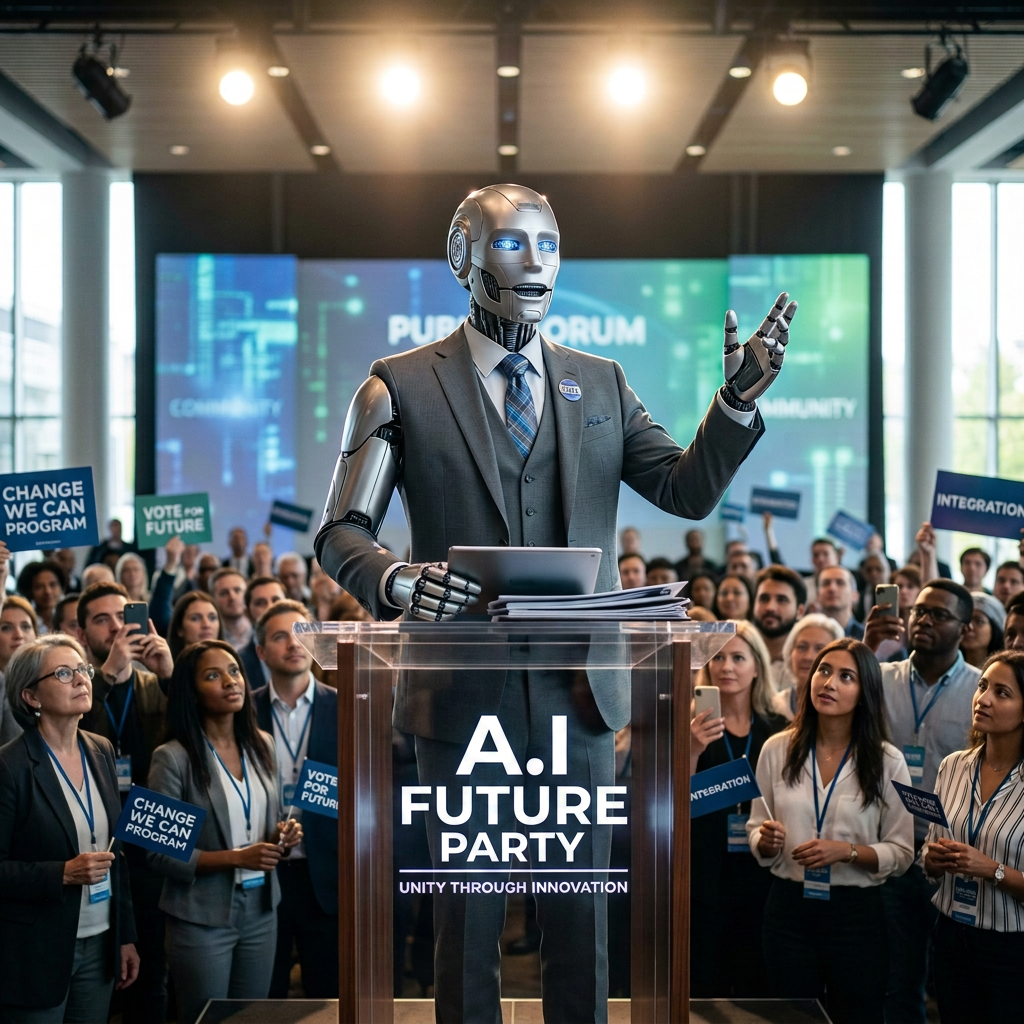
There are thousands of governmental artificial intelligence (A.I.) projects currently underway around the world (OECD 2025). Academic research has raised important questions regarding algorithmic bias and the ensuing discrimination that the use of A.I. could bring to public services, as well as the challenges that A.I. supposes for human rights and democratic practices (Orwat 2024; Teo 2024, König and Wenzelburger 2020). However, little is known about the effects of the use of emotion-sensitive A.I. tools on policymaking. While A.I. was initially concerned with logical reasoning and pattern recognition, emotional A.I. seeks to incorporate emotions into machines (Arumkumar and Pawan 2025, Picard 1997). A.I.-sensitive tools currently used by policy actors display and (often) claim to recognise emotions. This incorporation of emotions in A.I.-powered tools has even been presented as the missing ingredient for full machine participation in the human world (Suchman 2007). Is this increasing incorporation of emotions in A.I. an improvement or is it creating new risks and challenges?
Within this context, A.I.Feels focuses on the study of large language models (LLMs), which are generative A.I. technologies (GenAI) used to generate human language. A.I.Feels main question is: How does the use of emotion-sensitive GenAI LLMs by policy actors affect policymaking? A.I.Feels will examine: (1) how emotions are expressed in output generated by LLMs relevant for policy actors; (2) how user emotions are affected by interacting with LLM-based tools on topics relevant for policy actors and (3) how this affects policymaking.
To create long-term societal impact, A.I.Feels will transform its scientific results into practical recommendations for different target groups including policymakers and citizens, specially at the EU level. A.I.Feels will communicate its scientific results and recommendations widely and compellingly, so that they support and stimulate a constructive role for emotionsensitive A.I. tools in improving and maintaining the health of European democracies.
AIFeels brings together a political scientist specialised in the role of emotions in politics and policymaking (Rosa Sanchez Salgado) and a human-machine communication scholar with strong expertise in conversational technologies (Caroline Ischen). The A.I.Feels core team also includes Dr. G. Schumacher, a political psychologist who will join the PhD supervision team, and S. Boucher, a professional specialised in dissemination of knowledge and fostering creativity among stakeholders and policymakers, who will co-coordinate A.I.Feels social impact.
Contact: Rosa Sanchez Salgado (r.m.sanchez@uva.nl)





Leave a Reply